When All-on-4 is the right choice, hopeless teeth and heavily pneumatized sinuses
Leggi in Italiano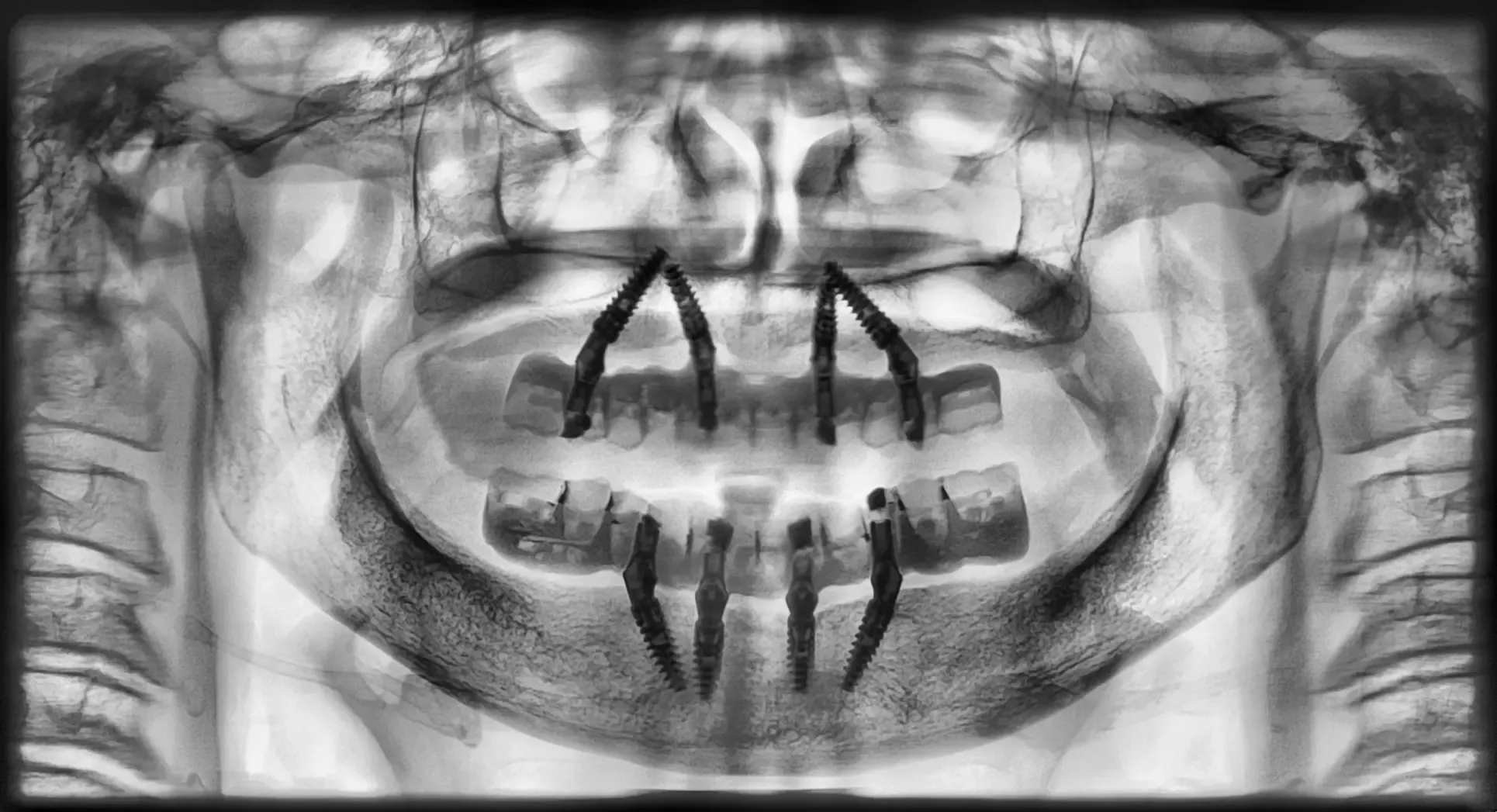
In brief — All-on-4 is indicated when the teeth cannot be saved and the bone under the sinuses is missing. This patient had both. Two distal implants tilted along the anterior sinus wall replaced a large bilateral sinus lift, and the fixed provisional prosthesis was screwed in on the day of surgery. All eight implants are in function at six months on the panoramic and at three years on periapical radiographs, with stable bone levels around every one of them.
Two conditions, and this patient had both
In most patients who are offered it, an All-on-4 type protocol is not really necessary. Teeth that could be treated are extracted, and four implants go where the bone would allow a less destructive rehabilitation.
The excuse is always the same: “you don’t have enough bone”. Between the ubiquitous “atrophy”, the usual “hopeless” teeth and implants “that last forever, guaranteed for life”, full-arch extraction followed by immediate loading has become routine.
An All-on-4 type protocol makes sense when two conditions occur together: the remaining teeth cannot be saved, and the bone does not allow axial implants in the posterior sectors without an extensive graft.
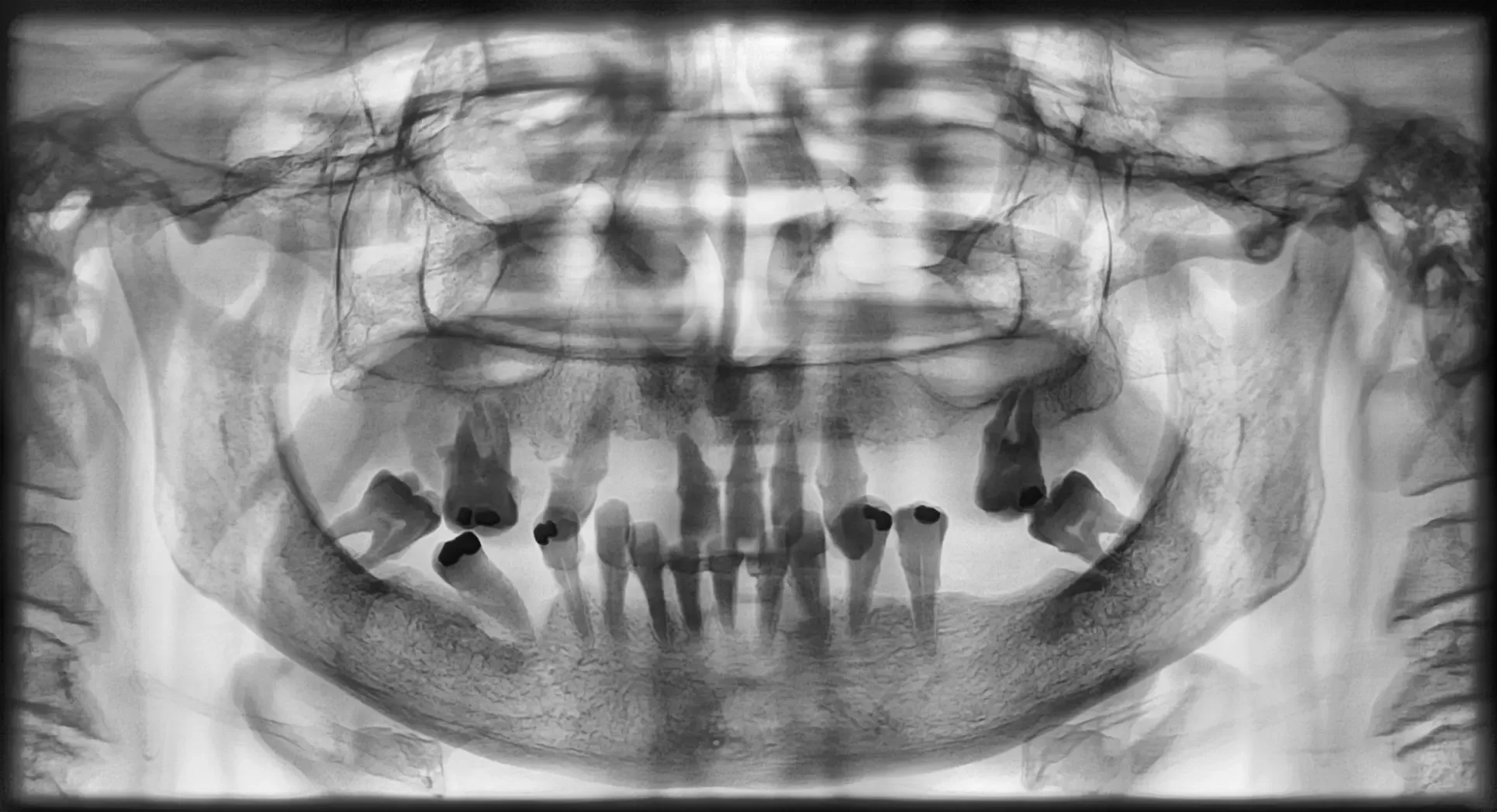
This patient had both. The remaining dentition could not be saved, upper or lower. The maxilla was truly atrophic, above all in the posterior sectors, with heavily pneumatized maxillary sinuses and only a few millimetres of ridge under the sinus floor.
Axial implants in the posterior maxilla would have required a lateral-window sinus lift on both sides, with grafting and months of waiting before loading. I chose another route, because here it was genuinely indicated: four implants per arch, the two distal ones tilted, and a fixed provisional prosthesis screwed in on the same day.
The case record, with the radiographs side by side, is in the clinical cases section (in Italian).
Where the tilted implant goes
The All-on-4 concept was born in 2003 in the edentulous mandible, with four anterior implants under immediate loading (Maló et al., 2003). In the maxilla its value may be even clearer. The distal implant follows the anterior wall of the sinus, with its apex in the bone in front of the cavity. That bone still belongs to the canine buttress, the anterolateral pillar of the maxillary buttress system. The emergence moves back to the premolar area. The sinus stays intact and the prosthetic cantilever gets shorter. All of this depends on angled intermediate abutments, the multi-unit abutments (MUA). Without them the divergent angulation of the implants would make the prosthesis impossible to build.
For systematic reviews, the minimum number of implants has long been settled. An overview of 36 systematic reviews on the edentulous maxilla concludes that a one-piece full-arch fixed prosthesis can rest on at least two axial anterior and two tilted posterior implants, or on six to eight axial implants spread along the arch (Messias et al., 2021).
Gioacchino Cannizzaro’s randomized trials have pushed that minimum lower. In the mandible, in a trial of 60 patients, immediately loaded fixed prostheses on just two implants had no implant or prosthetic failures at three years, with marginal bone loss similar to that of prostheses on four (Cannizzaro et al., 2017). With three implants, one-year results matched those on four in both the maxilla and the mandible (Cannizzaro et al., 2018). The authors present them as preliminary results, and follow-up is still short. This matters most for frail and truly atrophic patients who are not candidates for bone grafting and would otherwise be left with a removable denture.
How long the lever arm is, and how much more it weighs than the number of implants, I discussed in the piece on All-on-4 and All-on-6.
What the large sinus lift would have meant
The lateral sinus lift works, and in many cases it is the right choice. Here the residual ridge was low, and a low ridge is exactly where the lift gets complicated. In a meta-analysis of 1,809 lifts in 1,601 patients, the sinus membrane perforated in 19.2% of procedures, and mean residual height was significantly lower in the cases with perforation (Ye et al., 2025).
Then there is time. An extensive sinus graft, in most protocols, delays loading of the posterior sectors, and the patient may spend months with a removable denture.
A mixed approach is also possible, because the implants do not all have to be loaded at the same time. In some cases the anterior implants, two to four of them, placed in native bone, are loaded at once with a fixed provisional, while the posterior ones, placed with a sinus lift, heal undisturbed.
Direct comparisons between these techniques are few. In a randomized trial of 32 patients with severely atrophic maxillae, immediately loaded in both groups, tilted trans-sinus implants without grafting did not show more failures, more complications or more bone loss at one year than implants placed with sinus lift and grafting (Grandi et al., 2019). In a retrospective cohort of 87 patients followed for up to ten years, survival was 98.4% for axial and tilted implants in native bone under immediate loading and 96.8% for axial implants in grafted bone under delayed loading, with no significant difference (Haroyan-Darbinyan et al., 2025). It is a retrospective study, with the limits that follow from that.
The price of tilting
Tilting may have a cost in terms of bone resorption. A systematic review of 24 studies, with 2,637 patients followed for three to eighteen years, reports cumulative survival of 93.91% for implants and 99.31% for prostheses, and significantly less marginal bone loss around axial than around tilted implants (Del Fabbro et al., 2022).
A 2024 umbrella review gives the size of that difference: in the long term tilted implants lose 0.18 millimetres more bone, and there is no difference in failures, with a relative risk of 1.02 (Malak et al., 2024). The most recent meta-analysis on All-on-4 and All-on-6, 55 studies, reports All-on-4 survival of 98.14% beyond five years (Shao et al., 2026).
Two tenths of a millimetre is a real figure. It certainly cannot be seen on a panoramic, and it does not change survival. Set against an extensive bilateral sinus lift, in my view it weighs little.
The same order of magnitude emerged in our own retrospective CBCT study of 25 patients followed for up to 24 months. On the buccal aspect, tilted implants had lost a mean of 0.70 millimetres of bone and axial implants 0.42. On the other aspects the difference was not significant, and success and survival were 100% in both groups (Bruschi et al., 2019). CBCT also shows the buccal aspect, which the panoramic does not.
What the six-month panoramic shows
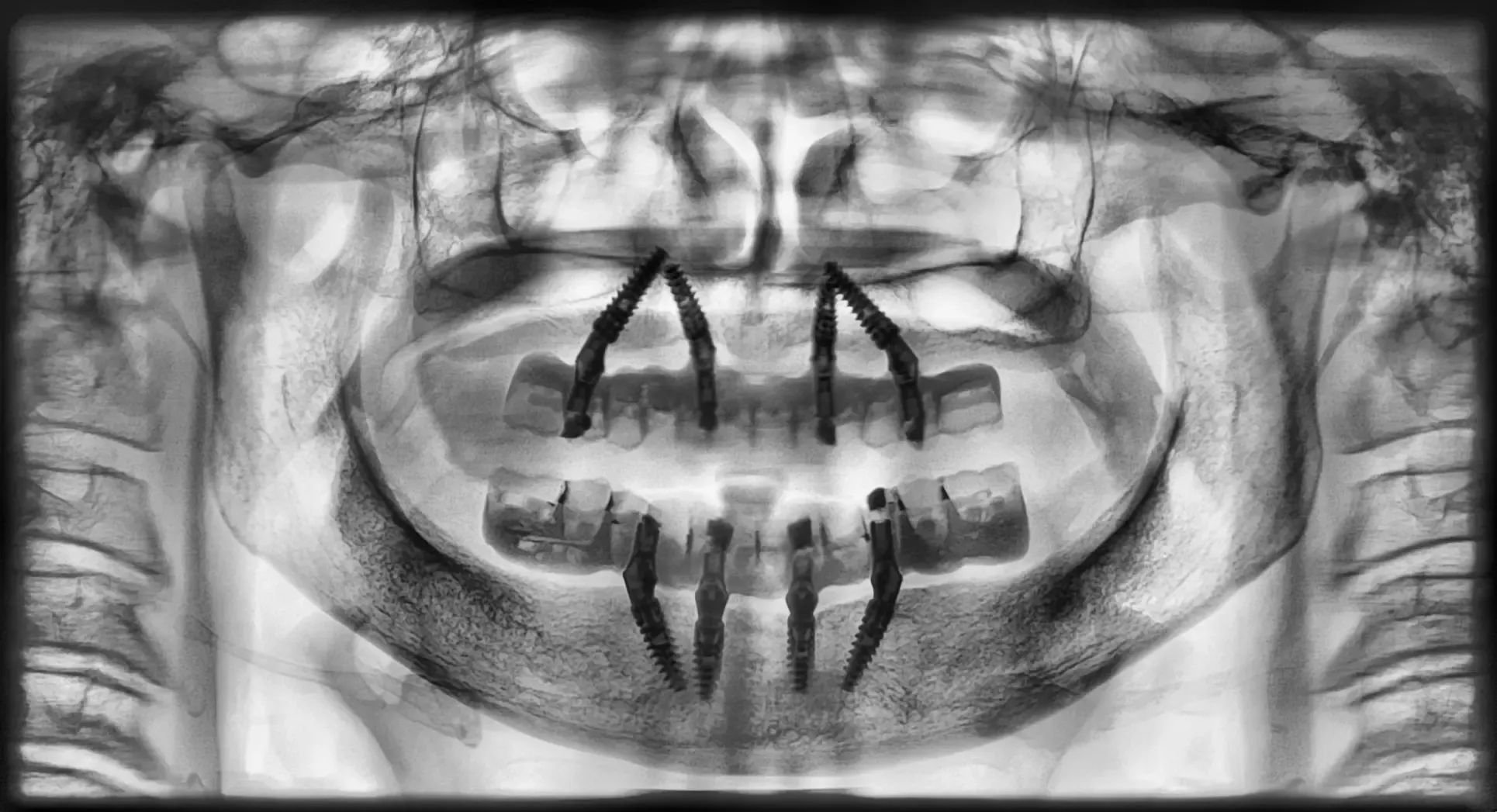
In the maxilla the two distal implants run along the anterior wall of the sinuses, engage the canine buttress together with the anterior implants, and emerge in the premolar area, with angled multi-unit abutments bringing the prosthetic axis back to vertical. The two anterior implants are axial. The mandible follows the same scheme: the distal implants are tilted and stay in front of the mental foramina, the anterior ones are straight. Both prostheses are fixed and screw-retained, with a short distal cantilever.
This is what the panoramic is for: position, angulation, relation to the sinus and the foramen, and prosthetic seating. Marginal bone is not measured on this image. Magnification changes from one region to another, horizontal distortion is marked in the posterior sectors, and the buccal and palatal aspects do not appear. Following the bone around the implant necks requires parallel periapical radiographs, repeated over time with the same geometry.
At three years, the periapicals
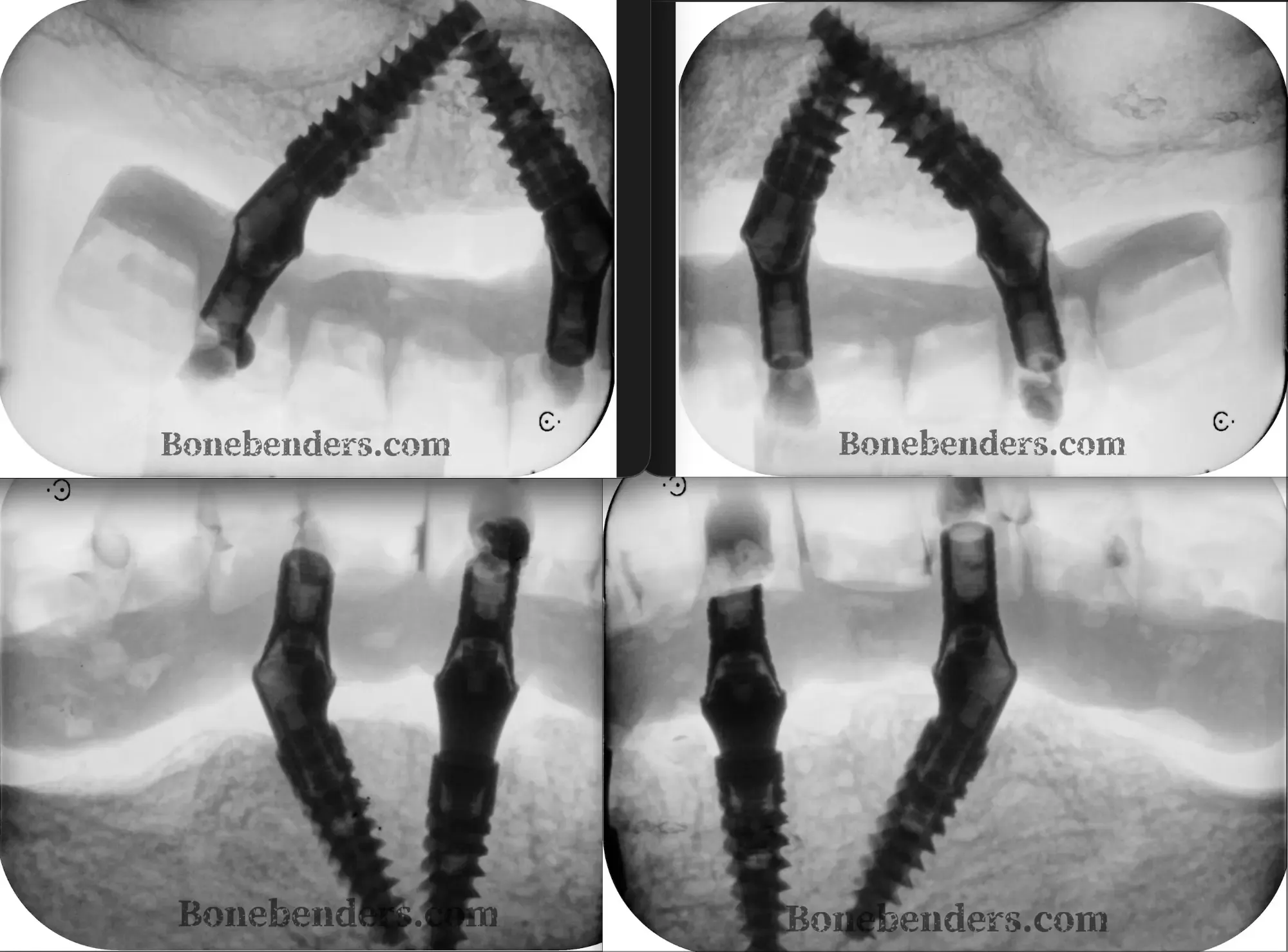
The periapical radiographs taken at three years do what the panoramic cannot. They show each implant in full, from neck to apex, with the connection and the abutment, and they allow the bone to be read on the mesial and distal aspects. At three years all eight implants are in function under the two fixed prostheses, and bone levels are stable around every one of them, tilted and axial.
When it should not be done
The more common case is the opposite of this one. If the teeth can still be treated, the right thing to do is, without doubt, to treat the periodontitis and save the teeth. If bone is missing in one sector but not across the whole arch, it is rebuilt to measure only where needed. In both situations, extracting everything to place four implants takes from the patient something that cannot be recovered: the teeth and the bone around them. I have written about when full extraction for implants makes sense and about the comparison between custom regeneration and All-on-X.
There is also a limit on the other side. The tilted implant needs bone in front of the sinus and in the canine buttress. If that is missing too, four conventional implants find no anchorage, and the discussion moves to zygomatic implants or to regeneration.
References
- Maló P, Rangert B, Nobre M. “All-on-Four” immediate-function concept with Brånemark System implants for completely edentulous mandibles: a retrospective clinical study. Clin Implant Dent Relat Res. 2003;5 Suppl 1:2-9. doi:10.1111/j.1708-8208.2003.tb00010.x · PMID: 12691645
- Messias A, Nicolau P, Guerra F. Different interventions for rehabilitation of the edentulous maxilla with implant-supported prostheses: an overview of systematic reviews. Int J Prosthodont. 2021;34:s63-s84. doi:10.11607/ijp.7162 · PMID: 33571327
- Cannizzaro G, Felice P, Gherlone E, Barausse C, Ferri V, Leone M, et al. Immediate loading of two (fixed-on-2) vs four (fixed-on-4) implants placed with a flapless technique supporting mandibular cross-arch fixed prostheses: 3-year results from a pilot randomised controlled trial. Eur J Oral Implantol. 2017;10(2):133-145. PMID: 28555204
- Cannizzaro G, Cavallari M, Lazzarini M, Purello D’ambrosio G, Scialpi G, Audino S, et al. Immediate loading of three (fixed-on-3) vs four (fixed-on-4) implants supporting cross-arch fixed prostheses: 1-year results from a multicentre randomised controlled trial. Eur J Oral Implantol. 2018;11(3):323-333. PMID: 30246185
- Ye M, Lin X, Liu W, Calatrava J, Huang W, Wang HL. Residual ridge height as a potential risk factor for membrane perforation during lateral-window sinus elevation surgery: a systematic review and meta-analysis. BMC Oral Health. 2025;25(1):1522. doi:10.1186/s12903-025-06902-6 · PMID: 41044599
- Grandi T, Faustini F, Casotto F, Samarani R, Svezia L, Radano P. Immediate fixed rehabilitation of severe maxillary atrophies using trans-sinus tilted implants with or without sinus bone grafting: one-year results from a randomised controlled trial. Int J Oral Implantol (Berl). 2019;12(2):141-152. PMID: 31090746
- Haroyan-Darbinyan E, Gao Q, de Lillo P, Torres J, Abi-Nader S, Nach D, et al. Rehabilitation of the atrophic edentulous maxilla: a retrospective cohort study comparing survival of delayed-loaded implants in grafted bone versus immediately loaded implants in native bone. Clin Exp Dent Res. 2025;11(6):e70167. doi:10.1002/cre2.70167 · PMID: 41252708
- Del Fabbro M, Pozzi A, Romeo D, de Araújo Nobre M, Agliardi E. Outcomes of fixed full-arch rehabilitations supported by tilted and axially placed implants: a systematic review and meta-analysis. Int J Oral Maxillofac Implants. 2022;37(5):1003-1025. doi:10.11607/jomi.9710 · PMID: 36170316
- Malak AA, El Masri Y, El Masri J, Issawi HA, Salameh P, Aoun G. Implant failure and marginal bone loss between axial and tilted implants: an umbrella review with meta-analysis. Int J Oral Maxillofac Implants. 2024;39(6):875-883. doi:10.11607/jomi.10885 · PMID: 38941170
- Shao WH, Chen R, Wang S, Duan SY, Zhang XD, Tang YL. All-on-4 and All-on-6 implant-supported fixed prostheses for the edentulous jaw: a systematic review and meta-analysis. Int J Oral Maxillofac Surg. 2026;55(9):1098-1112. doi:10.1016/j.ijom.2026.04.002 · PMID: 42031576
- Bruschi E, Manicone PF, De Angelis P, Papetti L, Pastorino R, D’Addona A. Comparison of marginal bone loss around axial and tilted implants: a retrospective CBCT analysis of up to 24 months. Int J Periodontics Restorative Dent. 2019;39(5):675-684. doi:10.11607/prd.4110 · PMID: 31449578
FAQ
Why tilt the distal implants instead of lifting the sinus?
Do tilted implants lose more bone than axial ones?
Are four implants enough for a full upper arch?
Is a panoramic radiograph enough to follow up an All-on-4?
I have been offered an All-on-4. Is it always indicated?
When is All-on-4 not enough?
Cite this article
Ready for theses, slides and papers. If you cite it on a web page, make the URL a link so readers can reach the source.
Bruschi E. When All-on-4 is the right choice, hopeless teeth and heavily pneumatized sinuses [Internet]. Frosinone (Italy): Bonebenders; 2026 [cited 2026 Oct 25]. Available from: https://bonebenders.com/en/blog/when-all-on-4-is-the-right-choice/ doi:10.5281/zenodo.23510689
Bruschi, E. (2026, October 20). When All-on-4 is the right choice, hopeless teeth and heavily pneumatized sinuses. Bonebenders. https://doi.org/10.5281/zenodo.23510689
@misc{bruschi2026when,
  author       = {Bruschi, Ernesto},
  title        = {When All-on-4 is the right choice, hopeless teeth and heavily pneumatized sinuses},
  year         = {2026},
  month        = oct,
  howpublished = {Bonebenders},
  url          = {https://bonebenders.com/en/blog/when-all-on-4-is-the-right-choice/},
  doi          = {10.5281/zenodo.23510689},
  note         = {Accessed 2026-10-25}
} Go deeper
Espansione crestale (split crest) →Allargare la cresta senza trapianto — tecnica ERE e bonebending
Need a professional opinion?
Book an appointment at Dr. Bruschi's practice in Frosinone. First visit includes full diagnosis and personalised treatment plan.
Stai valutando un impianto dentale?
Ti hanno detto che non hai abbastanza osso, o ti hanno proposto un’arcata fissa? Ho scritto una guida di dieci pagine: le strade possibili, gli esami che servono e le dieci domande da fare prima di firmare.
Ricevi la guidaStay Updated
New articles on periodontology, implantology and oral surgery — delivered to your inbox.
Comments
Loading comments...
Leave a comment