Bálint Orbán: one of the greatest periodontists fled Nazism
Leggi in Italiano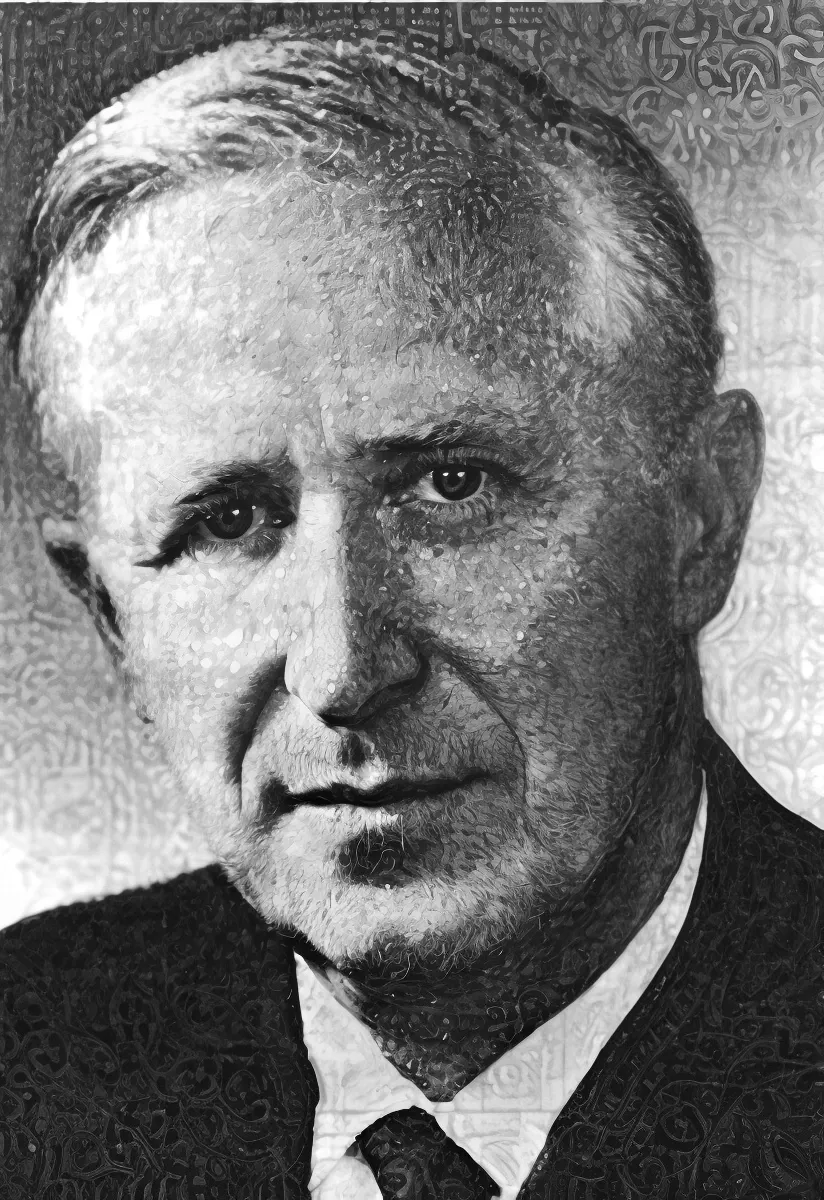
In brief — I start from Bergmann and Gross (2020) on Bálint Orbán. He was a central figure of the Vienna school, Jewish, stripped of his chair by the Nazis. In Chicago he started again and wrote modern periodontology. The AAP still names a Memorial Program after him.
The paper I start from is this: Bergmann and Gross, Pathology Research and Practice, 2020 — A fairytale career in spite of political disenfranchisement. Long title. Short story.
Bálint Orbán (1899–1960) is one of the greatest periodontists of the twentieth century. In 1938 Nazism took away his venia legendi — the right to teach — in Vienna. By then he was already in Chicago. From there he rebuilt a career that the American Academy of Periodontology still marks with the Orbán Memorial Program.
The prize that still carries his name
Every year the AAP invites young researchers to compete under that surname. The award is evidence of how far Orbán moved the way the field looks at tissue around the tooth — cementum, ligament, bone, gingiva — before deciding what to do in the mouth.
If you practice, teach, or read periodontology, you are still using much of his vocabulary, even when you do not know it.
Vienna, Gottlieb, and the lab of human periodontal histology
The 1920s. Vienna. Bernhard Gottlieb gathers around him what memory still calls the great “Vienna school”: microscopic studies of periodontal disease on human autopsy material. Fine and colleagues (Journal of Periodontology, 2015) walk through ninety years of Gottlieb’s legacy on the concept of periodontosis — the same clinical terrain that later debates on aggressive periodontitis and the JP2 clone still touch. Diekwisch (Stem Cells Dev, 2019) draws the line “from Vienna to Texas” in the same spirit.
Orbán is inside that circle. A pupil of a great teacher who grasps the experimental method — section, read, interpret, publish — and pushes it until it becomes the international standard. Bergmann and Gross place him among the pioneers of oral pathology and among the main figures of that Austrian school.
The point that matters for anyone working today is this: that generation turned the periodontium into an organ. Anatomy, pathology, biology. Before burs. Before grafts. Before surgical kits.
The books that shifted the paradigms
Two titles return in Bergmann and Gross as global milestones: Biology and Pathology of the Tooth and its Supporting Mechanism (1938) and Atlas of Clinical Pathology of the Oral Mucous Membrane (1955). Published in the United States. Translated, cited, used to train generations of dentists and periodontists.
In 1952, in JADA, Orbán signs The epithelial network in the periodontal membrane: the epithelial network in the ligament. A hard piece of observational method. You look at the tissue, you name what you see, you connect anatomy to the chair.
If you come from Albucasis and the first periodontal curettes, the leap here is different: from the instrument to the tissue the instrument must respect.
1938: taking the chair does not destroy an international network
Here Bergmann and Gross become essential. Sources: Austrian State Archives, Vienna University Archive. Orbán, a scientist of Jewish origin, is stripped of the venia legendi — the legal basis for university teaching in Vienna — as Hitler rises and Austria is annexed.
The escape is not improvised. In 1927–29 he had already worked in the United States and kept those contacts alive. Arthur Davenport Black secures visas for Orbán, his wife and son, and enrollment at Northwestern Dental School. By January 1938 the family is in Chicago. In March, in Vienna, the purges begin. Orbán is still listed on faculty rolls — and already working on the other side of the Atlantic. He brings with him the precious histologic material studied in Vienna.
He becomes associate professor of pathology and histology at Northwestern. After Rudolf Kronfeld’s death he directs the Research Foundation at Loyola University of Chicago. From 1948 he is professor of periodontics, and director of the Colorado Dental Foundation in Colorado Springs.
There is a quiet parallel with other Vienna stories we already tell — Carl Koller and the birth of local anesthesia among them — another career remade under pressure, another name that outlived the city that tried to erase it.
What remains of Orbán’s work today
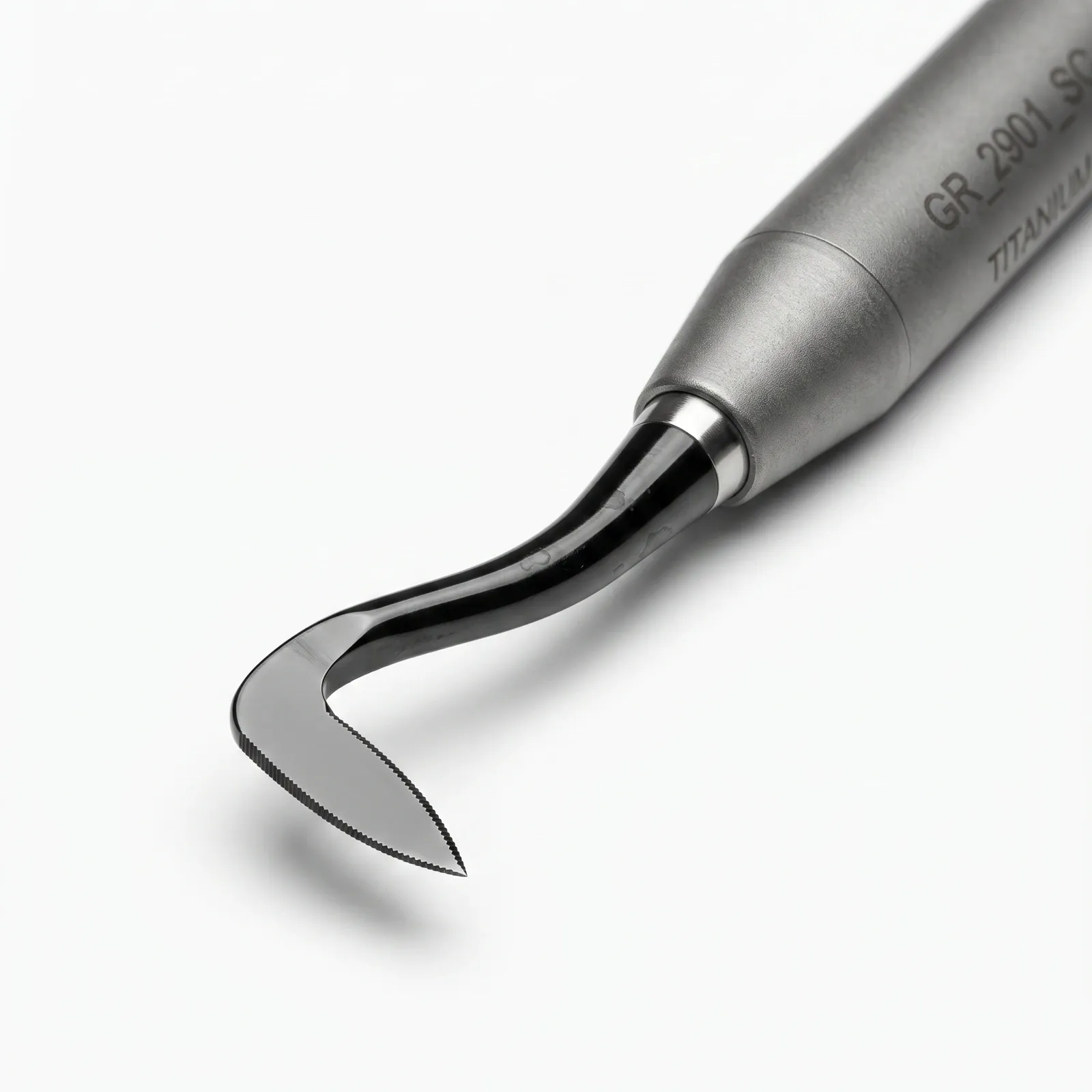
Periodontal histology as a mental prerequisite. Oral mucosa read as a map of what sits underneath. And instruments that still earn their place in the drawer: the gingivectomy knives that carry his name, essential in my daily work and in that of many colleagues who still reach for them the way I do.
Three paths worth taking
Reread a chapter of Orbán or the oral pathology atlas to see where our current histologic knowledge comes from.
Teach a piece of Vienna-school history to your team.
Do not split lab and chair. If diagnosis stays radiograph and probing with no idea of periodontal biology, you are working at half capacity.
Cover: stylized portrait of Bálint Orbán (archive / author’s processing).
References
- Bergmann C, Gross D. A fairytale career in spite of political disenfranchisement: The jewish oral pathologist Bálint Orbán (1899-1960). Pathol Res Pract. 2020;216(4):152862. doi:10.1016/j.prp.2020.152862. PMID: 32070656.
- Diekwisch TGH. Periodontal homeostasis: from Vienna to Texas—a century of periodontal research in the spirit of Bernhard Gottlieb. Stem Cells Dev. 2019;28(15):961-962. doi:10.1089/scd.2019.0126. PMID: 31218925.
- Fine DH, Cohen DW, Bimstein E, Bruckmann C. A ninety-year history of periodontosis: the legacy of Professor Bernhard Gottlieb. J Periodontol. 2015;86(1):1-6. doi:10.1902/jop.2014.140202. PMID: 25152003.
- Orban B. The epithelial network in the periodontal membrane. J Am Dent Assoc. 1952;44(6):632-635. doi:10.14219/jada.archive.1952.0112. PMID: 14927302.
FAQ
Was Orbán a lab histologist or a clinical periodontist?
Why does the American Academy of Periodontology still name a Memorial Program after him?
What does Bernhard Gottlieb have to do with Orbán?
Without the American network of 1927–29, would the 1938 escape have worked the same way?
Which of his books are still worth opening today?
Cite this article
Ready for theses, slides and papers. If you cite it on a web page, make the URL a link so readers can reach the source.
Bruschi E. Bálint Orbán: one of the greatest periodontists fled Nazism [Internet]. Frosinone (Italy): Bonebenders; 2026 [cited 2026 Oct 25]. Available from: https://bonebenders.com/en/blog/balint-orban-periodontology-vienna-to-chicago/ doi:10.5281/zenodo.23052176
Bruschi, E. (2026, August 27). Bálint Orbán: one of the greatest periodontists fled Nazism. Bonebenders. https://doi.org/10.5281/zenodo.23052176
@misc{bruschi2026balint,
  author       = {Bruschi, Ernesto},
  title        = {Bálint Orbán: one of the greatest periodontists fled Nazism},
  year         = {2026},
  month        = aug,
  howpublished = {Bonebenders},
  url          = {https://bonebenders.com/en/blog/balint-orban-periodontology-vienna-to-chicago/},
  doi          = {10.5281/zenodo.23052176},
  note         = {Accessed 2026-10-25}
} Go deeper
Espansione crestale (split crest) →Allargare la cresta senza trapianto — tecnica ERE e bonebending
Need a professional opinion?
Book an appointment at Dr. Bruschi's practice in Frosinone. First visit includes full diagnosis and personalised treatment plan.
Stay Updated
New articles on periodontology, implantology and oral surgery — delivered to your inbox.
Comments
Loading comments...
Leave a comment