One Disc Changes Everything: Fast, Efficient, Atraumatic
Leggi in Italiano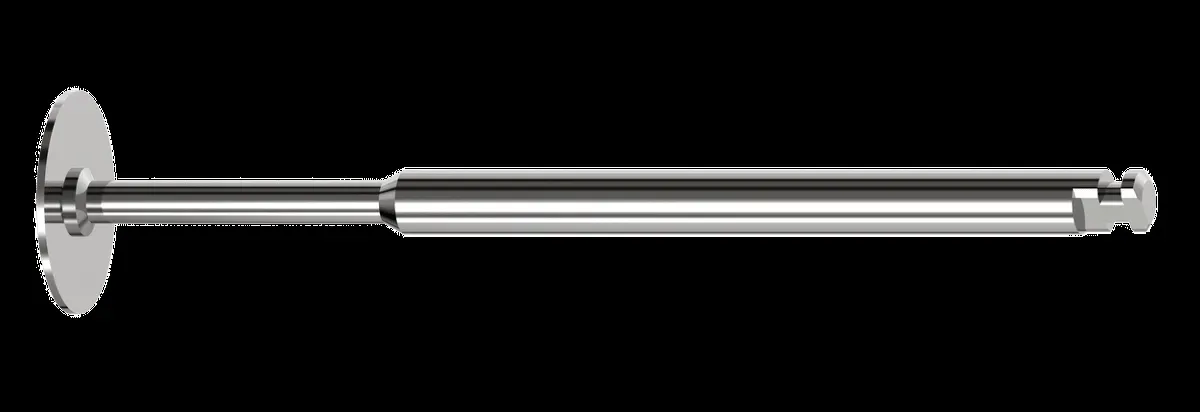
In brief — The diamond disc revolutionizes mandibular expansion without overheating and without the mallet. It turns the mandible from a challenge into routine, enabling 2-4 mm of horizontal expansion in dense D1-D2 bone and removing the need for GBR.
A classic instrument finds new life thanks to the Bonebenders kit!
Dear colleague,
Have you given up on bone expansion in the lower arch?
Have you ever thought: “Expansion is easier up top; in the mandible, better to use GBR.”?
Have you ever fought against dense D1-D2 bone that feels like reinforced concrete?
Have you ever watched surgical times stretch to infinity for a horizontal expansion in the mandible?
Have you ever thought there had to be a more elegant way to prepare bone before expansion than reaching for the mallet?
Have you ever struggled to close the flaps during a GBR and caught yourself thinking “If only I could have done a simple expansion…”?
If you recognize yourself in these lines, keep reading — because you have just solved these problems…
You are not alone.
The mandible has ALWAYS been the greatest challenge for bone expansion. We all prefer to work in the upper jaw, and we often talk ourselves into “GBR is better down here”.
But what if I told you there is a way to make mandibular expansion as simple as maxillary expansion?
That is exactly why the instrument we are about to discuss was born.
The Diamond Disc: The Key to Mandibular Expansion
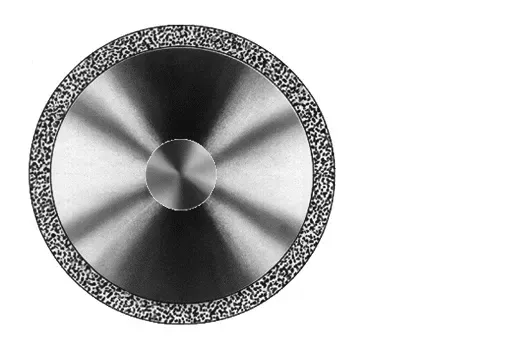
Diamond discs have existed in dentistry for decades, but the one developed for the Bonebenders kit turns a traditional instrument into the key that unlocks mandibular expansion.
This is not about reinventing the wheel — it is about turning the mandible from enemy to ally in bone expansion.
The diamond disc is an integral part of the Bonebenders protocol for tailor-made regeneration, and it stands out for one thing: it makes possible what once seemed impossible — fast, elegant, atraumatic horizontal expansions even in the densest bone.
The Revolution in Mandibular Expansion
Design Built for Dense Bone
- 8 mm diameter: the optimal size to penetrate mandibular cortical bone without overdoing it
- Diamond-coated only on the edge: maximum cutting efficiency concentrated where it is needed
- Two versions available: long and short handle for any mandibular anatomy
Correct use of the diamond disc directly affects implant design and primary stability, a crucial element in dense D1-D2 bone where every millimeter of precision counts for the success of osseointegration.
The Smart Alternative to GBR
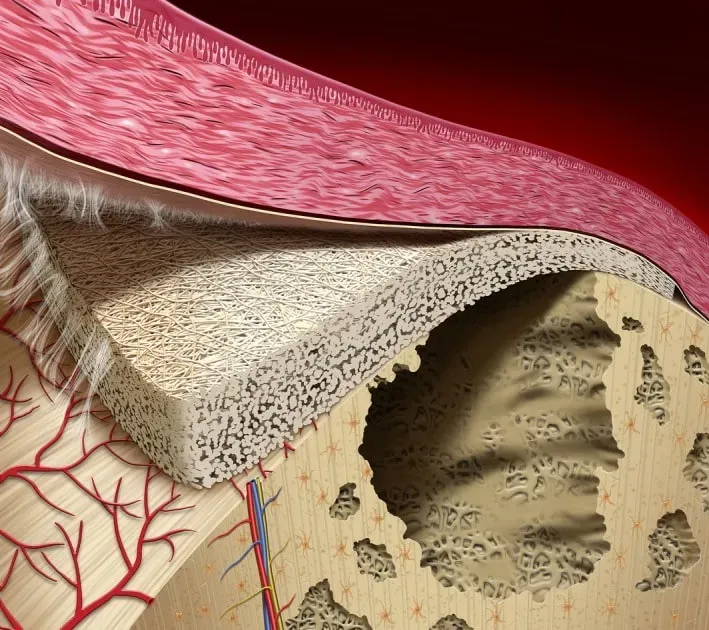
If you already do bone expansion, you have surely thought: “This GBR could have been a simple expansion…”
…and instead you find yourself battling sliding flaps…
…overlapping mattress sutures…
…beautiful titanium meshes to counter possible tissue dehiscence…
The diamond disc, together with the modified lancet bur and the expanders in the kit, changes the rules of the game:
- Zero bone overheating: unlike instruments that rely on vibration
- Drastically reduced times: superior efficiency for horizontal expansion — the cut happens in an instant, even at very low speed
- No flaps that are hard to close: you avoid the possible complications of GBR thanks to healing by second intention
When to Choose the Disc Over GBR
”Expansion is easier up top; in the mandible, better to use GBR”
The Mandible Is No Longer a Problem
With the diamond disc, the mandible becomes as simple as the maxilla:
- Controlled penetration: it gets through even the densest D1-D2 bone
- Predictable expansion: results comparable to the maxilla
- Less invasiveness: no flaps, no membranes, no complex sutures
”If only I could have done a simple expansion…”
When Expansion Beats GBR
The diamond disc lets you choose expansion even where you would once have done GBR. It is particularly effective in horizontal bone defects where traditional expansion fails:
- Moderate horizontal defects: 2-4 mm of controlled expansion become a fast routine
- Sufficient residual bone: making the most of what is there — a minimum of residual structure is required
- Cooperative patient: less trauma, faster healing, implant placement in the same session as the regeneration
Integrating It into the Anti-GBR Protocol
The Winning Sequence
The diamond disc follows a precise sequence that almost always replaces GBR. After using the modified lancet bur to create the guided path, the disc prepares the horizontal expansion perfectly:
- 3D assessment: “Expansion or GBR?”
- Modified lancet bur: creates the guided path
- Diamond disc: prepares the horizontal expansion
- Expanders: complete the atraumatic expansion, preparing the final site for implant placement
The “Expansion First” Strategy
Assessment → Lancet Bur → Diamond Disc → Expanders → Immediate implant → Success
(instead of: Assessment → GBR → Re-entry after X months → Delayed implant → Success)
Every instrument brings you closer to success, without the complications of traditional GBR.
”A more elegant way than the mallet”
Finesse Instead of Force
- Millimetric precision: absolute control of the cut
- Respect for anatomy: no trauma to noble structures
- Surgical elegance: at last, the mandible is a pleasure
I know. Someone still wants you to believe that hammering the mandible while the patient holds their chin with both fists, stiffening every cervical muscle, is something efficient and modern. Here is a little secret in advance: it is not. It was a system that made sense 20-30 years ago, and back then it was fine. But now… there is no need to hammer.
The Benefits That Change Clinical Practice
For the Clinician
- More treatable cases: expansion instead of GBR
- Reduced times: superior operating efficiency
- Less stress: more predictable procedures
- Professional satisfaction: elegant results even in the mandible
For the Patient
- Less invasiveness: expansion instead of GBR
- Faster healing: no flap to scar over
- Superior comfort: zero overheating, vibration and zero hammering
- Contained costs: no biomaterials and no associated extra costs
For the Clinical Result
- Superior predictability: controlled, gradual expansion
- Biology respected: natural regeneration preserved
- Perfect integration: total synergy with the Bonebenders kit
- Total control: radiographic check possible even with intraoperative CBCT
The Revolution Is in the Approach
The Bonebenders diamond disc is not revolutionary for its technology, but for how it revolutionizes your approach to the mandible.
No more “expansion up top, GBR down below”. Now it is: “expansion everywhere, with the right instruments”.
It is this shift in mindset that turns a traditional disc into your ally for controlled osteomucosal expansion even in the most complex cases.
Biology and Regeneration Respected
Correct use of the diamond disc preserves and enhances the natural biological processes:
- Vascularization intact: no thermal damage to the vessels
- Vital osteocytes: the cellular component is preserved, not fried
- Microarchitecture respected: expansion instead of destruction, milling and chip harvesting
But can you really do everything with the diamond disc, the Bonebenders kit and expansion?

Every technique has limits. This modern version of expansion has them too.
So, with the disc and the kit you can do a great deal — far more than before!
But not everything.
Every technique has limits, but limits are made to be pushed! And with these innovative instruments, the limits of expansion have been raised considerably.
But they exist.
What are these limits?
- D1 bone with an extremely thick cortex is a nasty beast for expansion. Inevitably so.
- Hourglass-shaped alveolar bone: unfortunately, if the base is narrow, expansion does not work. A wide, pyramidal base is essential to gain stability at the apex and to avoid serious fractures of the basal bone.
- Vertical regeneration: it is certainly possible — indeed routine — to obtain 2-4 mm of vertical regeneration with horizontal expansion, even in the posterior mandible. In severe vertical defects, however, GBR is preferable. A horizontal sandwich osteotomy can be used for vertical regeneration, but it is extremely complex, particularly in the mandible.
That said — and it had to be said — expansion techniques, thanks to wonderful instruments like the diamond disc, can solve most alveolar defects at the same time as implant placement. Everyday implant dentistry becomes child’s play for both colleagues and patients, for a calm and efficient practice.
The Evidence Is Not an Opinion: What the Numbers Say
You might think all this enthusiasm for expansion is the story of someone who threw away the mallet and now has to justify it. It is not. The recent literature is fairly clear, and it is worth facing head-on.
A 2023 meta-analysis of 35 studies (Al Haydar, Kang and Momen-Heravi, International Journal of Oral & Maxillofacial Implants) quantified the mean horizontal gain of the alveolar ridge split at 3.06 mm, with an implant survival rate of 98.17% across 4,446 implants. The figure that strikes me most is a different one: no significant difference between sites treated with graft material and those without. Bone, when you move it instead of replacing it, does not need biomaterial to integrate. This is exactly the principle behind bonebending versus traditional regeneration.
The same year, a second meta-analysis (Lin and colleagues, BMC Oral Health, 2023) confirmed the picture: a mean gain of 3.35 mm and survival of 98.1%. Two independent research groups, almost overlapping numbers. When that happens, it usually means the clinical reality really is that.
And here comes the honesty I owe the reader. Vorovenci and colleagues (Biomedical Reports, 2024) compared the three roads head-to-head — osseodensification, GBR and ridge-split — and GBR stays on top for pure horizontal gain: 4.04 mm against the 3.66 mm of ridge-split. The difference exists. But it is a handful of tenths of a millimeter, paid for with flaps, membranes, biomaterials and months of waiting. In the vast majority of horizontal bone defects those tenths do not change the outcome: they only change how much the patient suffers to get there.
On the safety side, the most recent systematic review (Azadi and colleagues, Oral and Maxillofacial Surgery, 2025) reports a 100% survival rate for implants placed at the same time as expansion, with a complication rate close to zero. There is one caveat, and it is right to report it: survival probability declines slightly over the months, and the width gains described for expansion alone are more modest — around 1.5 mm — when working on very thin ridges. It confirms what I always say: case selection is everything. The instrument does not forgive the wrong indication.
Conclusions: The End of the “GBR-Only in the Mandible” Era
The diamond disc, together with the instruments of the Bonebenders kit, marks the end of an era: the one in which the mandible meant mandatory GBR.
Now you can choose expansion in the mandible too, with the same safety and predictability as the maxilla.
When dense D1-D2 bone no longer frightens you, when the piezo becomes just one of the options, when surgical times shrink and elegance replaces the “mallet”, the diamond disc turns every mandibular challenge into a success.
Its perfect integration into the Bonebenders protocol makes it the instrument that was missing to make mandibular expansion finally simple, fast and efficient.
As shown both clinically and scientifically, the Bonebenders approach values every chance of natural regeneration — in the mandible too.
References
- Al Haydar B, Kang P, Momen-Heravi F. Efficacy of Horizontal Alveolar Ridge Expansion Through the Alveolar Ridge Split Procedure: A Systematic Review and Meta-Analysis. Int J Oral Maxillofac Implants. 2023;38(6):1083-1096. doi:10.11607/jomi.9972. PMID: 38085739.
- Lin Y, Li G, Xu T, Zhou X, Luo F. The efficacy of alveolar ridge split on implants: a systematic review and meta-analysis. BMC Oral Health. 2023;23(1):894. doi:10.1186/s12903-023-03643-2. PMID: 37986181.
- Vorovenci A, Drafta S, Petre A. Horizontal ridge augmentation through ridge expansion via osseodensification, guided bone regeneration and ridge-split: systematic review and meta-analysis of clinical trials. Biomed Rep. 2024;21(4):139. doi:10.3892/br.2024.1827. PMID: 39161939.
- Azadi A, Hazrati P, Tizno A, Rezaei F, Akbarzadeh Baghban A, Tabrizi R. Bone expansion as a horizontal alveolar ridge augmentation technique: a systematic review and meta-analysis. Oral Maxillofac Surg. 2025;29(1):32. doi:10.1007/s10006-025-01335-5. PMID: 39808204.
FAQ
🔧 Does the diamond disc fully replace the piezoelectric device?
📏 Which version should I choose: long or short handle?
🦷 When should the diamond disc be avoided?
⚡ What speed should I use with the diamond disc?
💰 Is disc expansion cheaper than GBR?
📐 How much expansion is achievable?
🔄 Is it compatible with other implant systems?
📚 Is specific training needed to use it?
Cite this article
Ready for theses, slides and papers. If you cite it on a web page, make the URL a link so readers can reach the source.
Bruschi E. One Disc Changes Everything: Fast, Efficient, Atraumatic [Internet]. Frosinone (Italy): Bonebenders; 2025 [updated 2026 Jun 23; cited 2026 Oct 25]. Available from: https://bonebenders.com/en/blog/diamond-disc-mandibular-ridge-expansion/ Bruschi, E. (2025, September 18). One Disc Changes Everything: Fast, Efficient, Atraumatic. Bonebenders. https://bonebenders.com/en/blog/diamond-disc-mandibular-ridge-expansion/
@misc{bruschi2025diamond,
  author       = {Bruschi, Ernesto},
  title        = {One Disc Changes Everything: Fast, Efficient, Atraumatic},
  year         = {2025},
  month        = sep,
  howpublished = {Bonebenders},
  url          = {https://bonebenders.com/en/blog/diamond-disc-mandibular-ridge-expansion/},
  note         = {Accessed 2026-10-25}
} Go deeper
Espansione crestale (split crest) →Allargare la cresta senza trapianto — tecnica ERE e bonebending
Need a professional opinion?
Book an appointment at Dr. Bruschi's practice in Frosinone. First visit includes full diagnosis and personalised treatment plan.
Stai valutando un impianto dentale?
Ti hanno detto che non hai abbastanza osso, o ti hanno proposto un’arcata fissa? Ho scritto una guida di dieci pagine: le strade possibili, gli esami che servono e le dieci domande da fare prima di firmare.
Ricevi la guidaStay Updated
New articles on periodontology, implantology and oral surgery — delivered to your inbox.
Comments
Loading comments...
Leave a comment